Blog · 26 September 2026 · 3 min read
Chemical Drain Cleaners: Why Plumbers Tell You Not to Use Them
Short answer: chemical drain cleaners can dissolve a thin layer of hair or soap close to the plug hole, but they rarely clear a real blockage. They sit on top of it, attack old pipes and rubber seals, and make the job dangerous for whoever has to open the pipe afterwards. Mechanical methods — plunger, trap cleaning, a drain snake — are safer and work better.
How they work
Most are strong alkalis (caustic soda) or strong acids. Alkaline products turn fat into a soap-like substance and break down hair; acidic ones attack mineral deposits and organic matter. Both produce heat when they react.
That works when the product can reach the blockage and there is not much of it. In a fully blocked pipe full of standing water, the product is diluted and simply sits there.
Why they often fail
Blockages in kitchen pipes are usually metres of grease coating the pipe walls, not a single plug. Toilet blockages are often wipes, which chemicals do not dissolve. Blockages in the building column are far out of reach.
The typical result: the product clears a small channel for a few days, and the drain blocks again — now with caustic liquid in it.
What they do to old pipes
Many older Lisbon buildings still have old metal waste pipes, old joints and old rubber seals. Repeated chemical use corrodes metal, hardens and cracks seals, and can soften some plastics with the heat of the reaction.
A drain that "needs a bottle every month" is a pipe that is being slowly damaged while the real problem stays.
The safety problem
Caustic and acidic drain cleaners cause serious burns to skin and eyes. When a plunger is used on a sink full of chemical, it splashes. When a trap is opened, the liquid pours out.
Mixing two different products — or a drain cleaner with bleach — can release toxic gases. Never combine them, and never use one after another.
If you have used a product and the drain is still blocked, tell the plumber which product, before they start.
What to use instead
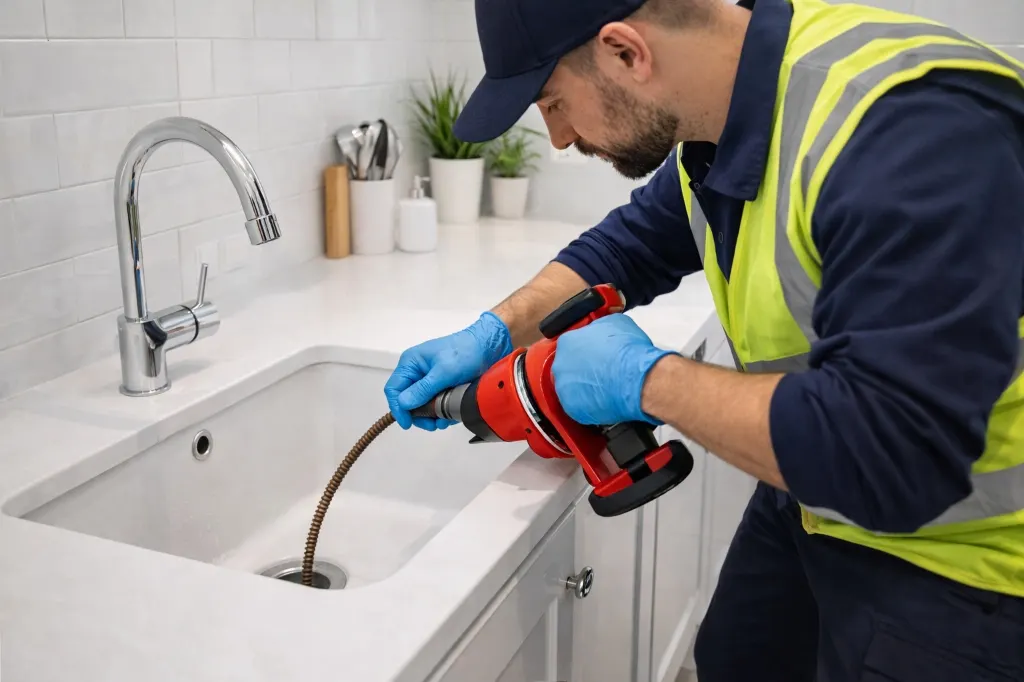
A plunger, used properly. Cleaning the trap by hand. Hot (not boiling) water with washing-up liquid for grease. A hand drain snake for blockages just beyond the trap.
For toilets see blocked toilet with no plunger; for sinks see kitchen sink blocked; for showers see shower drain clogged.
What about enzyme cleaners?
Biological or enzyme cleaners are much gentler and can help with light organic build-up and smells if used regularly as maintenance. They are slow and will not clear an actual blockage.
If a drain cleaner splashes on you
Rinse skin with plenty of running water for several minutes and remove contaminated clothing. For eyes, rinse immediately and continuously and seek medical help. The product label has specific first-aid instructions — keep the bottle to show.
In Portugal, the poison information centre (CIAV) can advise; in an emergency, call 112.
A maintenance routine that beats chemicals
Kitchen: strainer in the plug hole, fat in the bin, hot water with washing-up liquid monthly, trap cleaned twice a year.
Bathroom: hair catchers, shower traps cleaned every month or two, only toilet paper in the toilet.
Anywhere: deal with slow drains early — they are blockages forming.
Why plumbers prefer mechanical methods
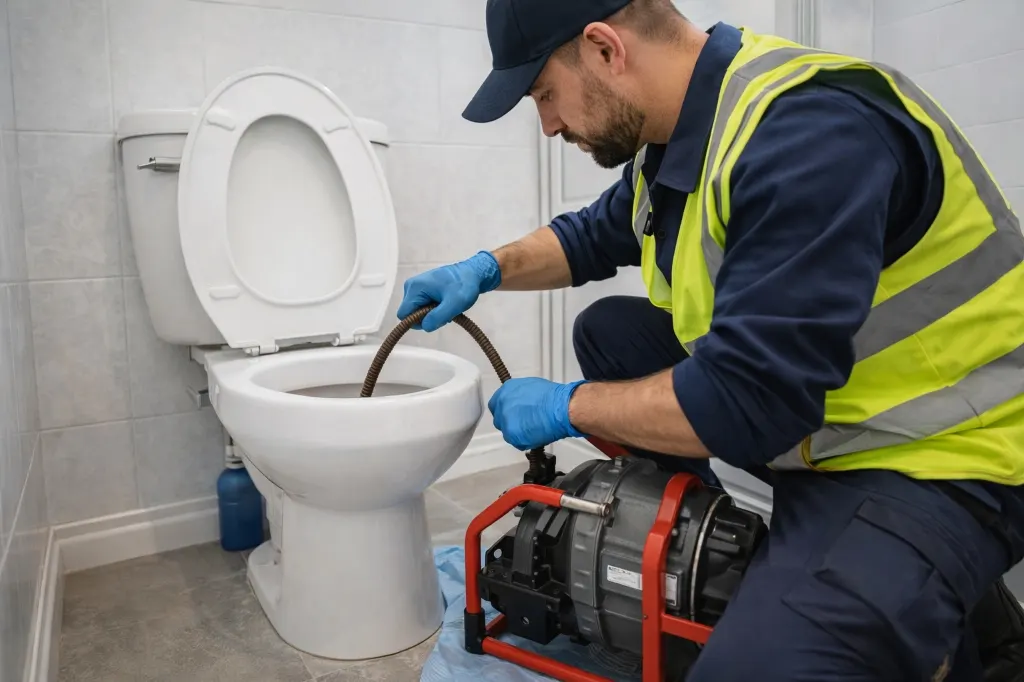
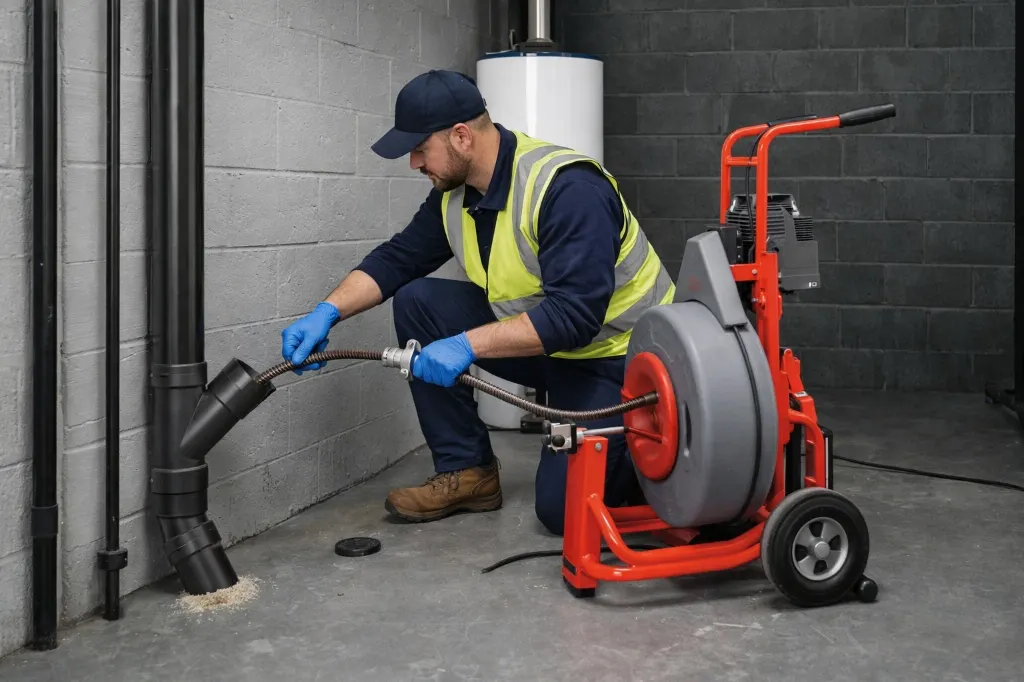
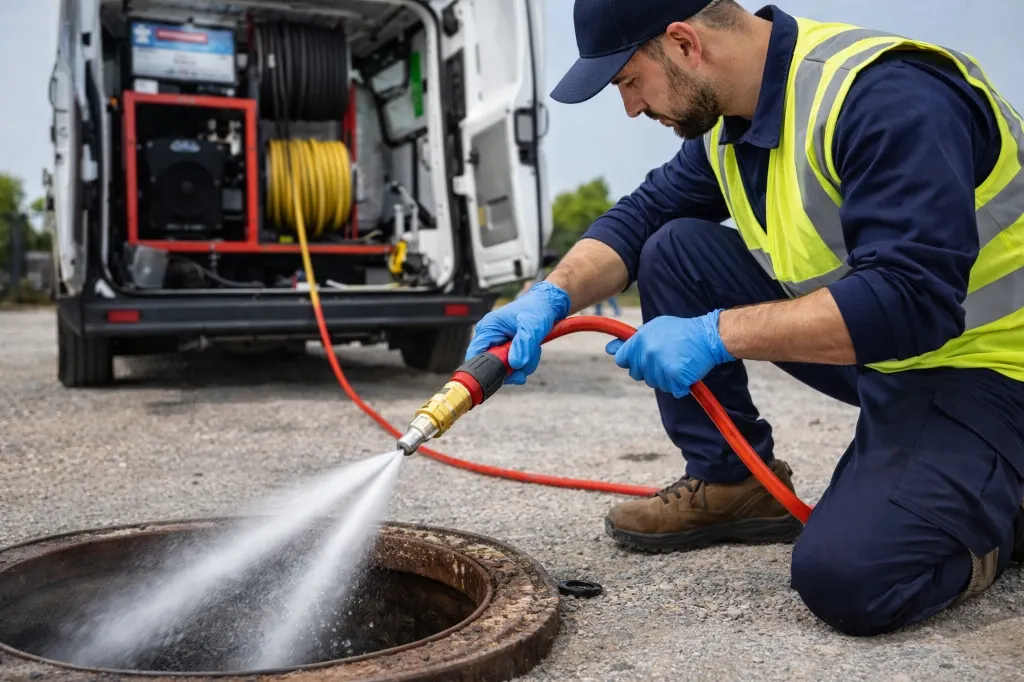
Snakes and jetting remove the blockage instead of dissolving part of it, work on wipes and grease alike, and do not damage old pipes. They also let us see what came out, which tells us why it blocked. Unblocking starts from 75 €.
Skip the chemicals — we clear blockages mechanically, from 75 €.
Drain unblocking in LisbonFrequently asked questions
Can drain cleaner damage PVC pipes?
Occasional use is usually tolerated, but the heat of the reaction and repeated use can damage joints and seals.
I used a drain cleaner and it is still blocked. What now?
Do not add another product. Leave it, ventilate, and tell the plumber exactly what you used.
Is baking soda and vinegar safe?
Yes, it is safe, but it is mainly useful for smells and very light build-up — not for real blockages.
Do plumbers use chemicals?
Rarely. Mechanical clearing and jetting are safer and more effective.
What is the best way to prevent blockages?
No fat down the sink, no wipes in the toilet, hair catchers in showers, and regular trap cleaning.

Services Lisbon plumbing team
Guides written by the plumbers who do this work in Lisbon homes every week — drains, leaks, water heaters and pipework.