Blog · 26 September 2026 · 3 min read
Where Is the Main Water Valve in a Lisbon Flat? How to Find It
Short answer: in most Lisbon flats there are two places to shut the water off — at the water meter (usually in a cupboard on the landing or at the building entrance) and at a main valve inside the flat, often near the kitchen, the bathroom or the entrance. Find both today. In a leak, knowing where they are is worth more than any plumber.
Place 1: at the water meter
Find your meter — see how to read your water meter. Next to it, on your side, there is usually a valve that shuts off water to your flat only.
If several meters are together, check the meter number on your water bill so you close the right one — closing your neighbour's is a common mistake.
Place 2: inside the flat
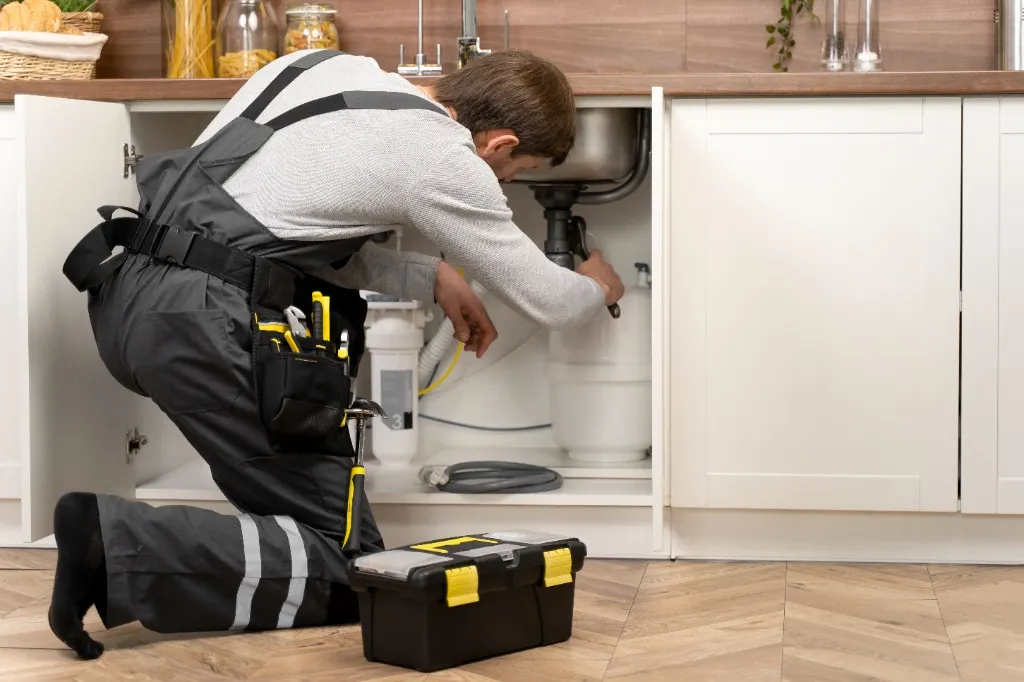
Many flats have a main valve inside, where the supply enters: in the kitchen (often under the sink or in a cupboard), in the bathroom, near the entrance, or next to the water heater. Some have a small access panel in the wall.
Newer or renovated flats may have separate valves for hot and cold, or a manifold with a valve for each room.
Local isolation valves
Most toilets, sinks and appliances have their own small valve on the supply pipe. For a leaking tap or cistern, closing that valve is enough — the rest of the flat keeps its water.
The valve types you will see
Lever (quarter-turn) valves: in line with the pipe = open; across the pipe = closed.
Round handle (gate or stop valve): turn clockwise to close. It can take several turns.
Some older valves have no handle and need a key or pliers.
Closing it safely
Close gently and fully. Do not force a valve that will not move — old valves can snap, and then you have a bigger leak.
Once a year, close and reopen your main valve to keep it from seizing. If it is stiff, leaks when turned, or does not fully stop the water, have it replaced before you need it.
If you cannot find it
Ask your landlord, the previous owner or the building administrator. Look for a small metal or plastic access panel near where pipes enter the flat.
If there is no valve inside the flat, it is worth having one installed. It turns every future leak from an emergency into a quick shut-off. See burst pipe: what to do.
Test it once a year
Close the main valve fully, open a tap to check the water stops, then reopen the valve slowly. Doing this once a year keeps it from seizing.
If the valve is stiff, drips when turned, or does not fully stop the water, replace it. A new valve is a small job; a seized valve during a flood is a big problem.
Label it
Put a tag on the main valve and on the isolation valves for the water heater and appliances. Anyone in the household — or a guest, or someone renting the flat — can then close the right one without searching.
If you rent out the flat, include the location of the valves and the meter in the house guide.
Turning the water back on
Open the main valve slowly to avoid a pressure surge. Open a tap to let air out, starting with the cold taps. If the water heater was switched off, turn it back on only once water flows normally through the hot taps.
Valve stuck, leaking or missing? We replace main valves and isolation valves — from 60 €.
Plumbing repairs in LisbonFrequently asked questions
What is a stopcock?
The British term for the main shut-off valve that stops the water supply to a home.
Does closing the main valve turn off the water heater?
It stops water reaching it. With an electric tank, also switch it off if you will drain the pipes.
My valve does not stop the water completely.
The valve is worn and should be replaced. Meanwhile, use the valve at the meter.
Can I close the valve at the meter myself?
Yes, the valve on your side of the meter is for you to use. Do not tamper with the meter itself.
Who pays for a new main valve?
Valves inside the flat are part of the flat's installation, so usually the owner.

Services Lisbon plumbing team
Guides written by the plumbers who do this work in Lisbon homes every week — drains, leaks, water heaters and pipework.