
Blog · 26 September 2026 · 4 min read
Water Leak From the Flat Upstairs: Who Pays in Portugal?
Short answer: generally, whoever is responsible for the pipe or fixture that leaked pays for the damage — the owner of the flat above if it is their private pipework, or the condominium if it is a shared pipe. In practice most cases are settled between home insurers. The key is proving where the water came from.
This is general information about how it usually works in Portugal, not legal advice. Your contract, the building's rules and your insurance policy all matter.
The first hours: what to do
Catch the water with buckets and towels, move furniture and electronics away, and switch off lights on the affected ceiling if water is near them.
Knock on the neighbour's door. Ask them to check for water in their bathroom or kitchen and, if they can, to close their main water valve. If they are not home, contact the building administrator.
Take photos and videos with dates: the ceiling, the damage, anything wet. You will need them for insurers and for any discussion later.
Owners, tenants and landlords
If you rent, tell your landlord in writing straight away — damage to the property is theirs to claim and repair. Your own belongings are covered by your contents insurance, if you have it.
If the neighbour upstairs rents, their landlord is usually responsible for the pipework, while the tenant may be responsible if they caused the leak (an overflowing bath, a tap left running).
How home insurance fits in
Most multi-risk home policies in Portugal (seguro multirriscos habitação) cover water damage and often the owner's civil liability towards neighbours. Report the incident to your insurer quickly and send the photos.
Insurers will want to know the cause. A plumber's written report stating where the leak was, what caused it and what was repaired speeds the claim up. More in water damage insurance claims.
Finding the source
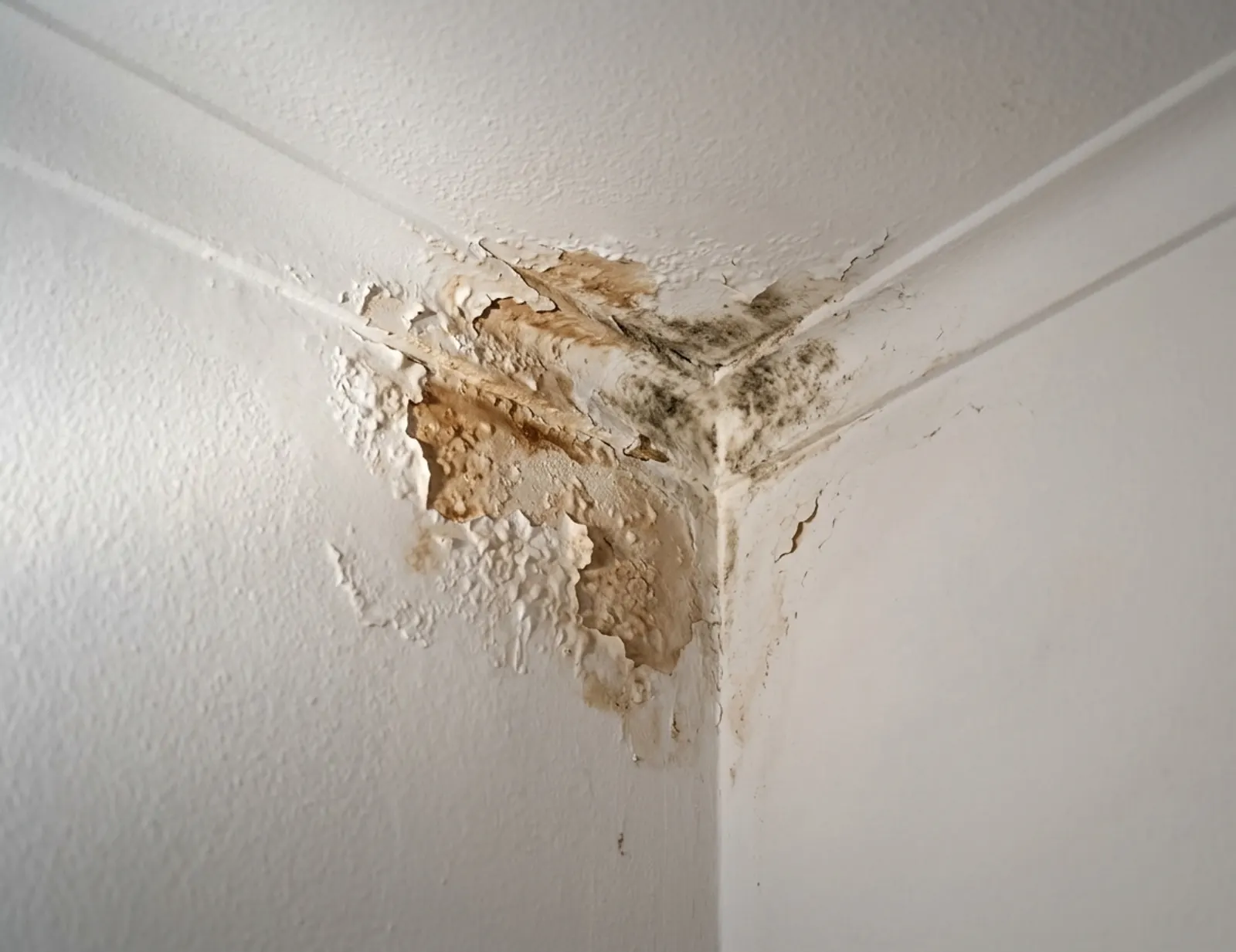
Most ceiling leaks come from a failed shower seal or tray, a waste pipe, or a supply pipe in the flat above. Some come from a shared column; on top floors, from the roof or terrace.
We check from both flats and from shared areas and confirm the source — see ceiling leaks and reports for insurers.
After the leak is fixed
Do not repaint straight away. The ceiling needs to dry completely — often weeks — and insurers may want to see the damage first. Painting too early brings the stain back.
If the damage keeps growing after the neighbour says it is fixed, the leak is not fixed. See damp and mould: leak or condensation.
What to write to your neighbour or landlord
A short, factual message: the date and time you noticed the water, where it appears, photos, and a request to check their bathroom or kitchen and contact their insurer. Keep a copy.
Written communication avoids misunderstandings and is what insurers will ask for.
Different sources, different outcomes
Shower seal or tray upstairs: usually the upstairs owner's responsibility, typically through their home insurance.
Supply pipe inside the upstairs flat: same — it is part of that flat's installation.
Shared column between floors: the condominium's responsibility.
Roof or terrace on the top floor: depends on whether the roof or terrace is a common part or for exclusive use — the building's title and rules decide.
If nobody takes responsibility
Get the source confirmed in writing by a professional. Send it to the neighbour, their landlord (if they rent) and the building administrator. Involve your insurer — they deal with the other party's insurer regularly.
If the dispute continues, legal advice or mediation may be needed. The earlier the cause is documented, the easier it is.
Protecting your flat in the meantime
Keep the area ventilated so it dries, move valuables, and do not repair or repaint until the leak is fixed and insurers have seen the damage. If electrical fittings got wet, have them checked before using them.
We find where the water is coming from and give you a written report for the neighbour and insurers — leak detection from 120 €.
Ceiling leaks in LisbonFrequently asked questions
My neighbour denies the leak is theirs. What now?
Have the source confirmed by a professional, in writing. Then involve the building administrator and both insurers.
Can I repaint the ceiling straight away?
No — wait until the leak is fixed, the ceiling is fully dry, and insurers have seen the damage.
The leak comes from the building column. Who do I call?
The building administrator. Shared pipes are the condominium's responsibility.
Do I need insurance to be compensated?
Not necessarily — the responsible party owes the damage — but insurance makes the process much simpler.
How long does a ceiling take to dry?
From days to several weeks, depending on how much water there was and ventilation.

Services Lisbon plumbing team
Guides written by the plumbers who do this work in Lisbon homes every week — drains, leaks, water heaters and pipework.