Blog · 26 September 2026 · 3 min read
9 Signs of a Hidden Water Leak in Your Flat
Short answer: the most reliable sign is your water meter moving when nothing is using water. The others are visible: damp or stained patches, bubbling or flaking paint, loose or hollow-sounding tiles, a musty smell, mould in one spot, low pressure, a warm floor, or a neighbour complaining about their ceiling. Two or more together make a hidden leak very likely.

1. The water meter keeps turning
With every tap closed, the meter should be still. If the small dial moves, water is escaping. It is the one sign that proves a leak exists — see how to read your water meter.
2. A higher water bill
A bill that jumps without any change in how you live. Check that it is not a correction after estimated bills, then do the meter test. See average water bill in Portugal.
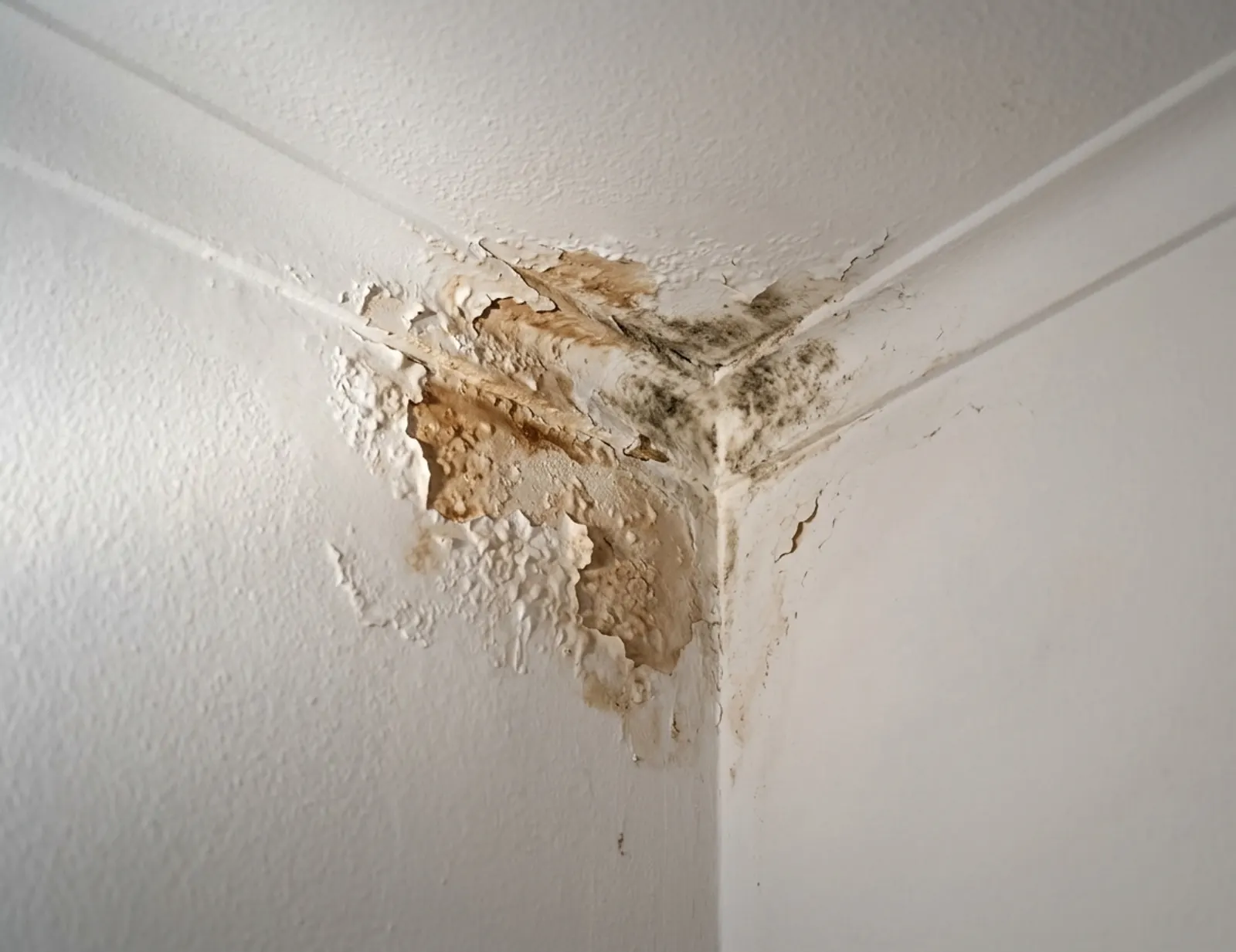
3. Damp patches and stains
On walls next to bathrooms and kitchens, at the base of walls, or on the ceiling below a bathroom. A stain that grows, or that has a darker edge, is active.
4. Bubbling, flaking or swollen paint and plaster
Water behind paint pushes it off the wall. Swelling skirting boards and door frames near bathrooms are another version of the same sign.
5. Loose, cracked or hollow tiles
Tiles that sound hollow when tapped, move, or have dark grout lines can mean water is getting under them — often from a leaking shower tray or supply pipe. See leaking shower tray.
6. Musty smell and mould in one spot
Condensation causes mould in cold corners and around windows, spread out. A leak causes mould in one area, often at a specific height, and keeps coming back after cleaning. See damp and mould: leak or condensation.
7. Low pressure
Water escaping on the way can reduce pressure at the taps. On its own, low pressure is more often limescale — see low water pressure in the shower.
8. A warm spot on the floor
A leaking hot-water pipe under the floor can make a patch of tiles warm to the touch, and makes the water heater run more than usual.
9. The neighbour downstairs
Often the first person to notice a leak in your bathroom is the person below you. If they report a stain, take it seriously even if you see nothing. See leak from the flat upstairs.
What to do next
Do the meter test to confirm. Check the easy suspects: toilet cisterns, the water heater safety valve, hoses under sinks and behind appliances.
If those are fine, the leak is inside a wall or floor. Leak detection finds the exact spot so only a small area is opened.
How a leak detection visit works
We start with the meter and the visible fittings, then isolate and pressure-test the hot and cold circuits separately. That tells us which circuit is losing water. From there we narrow down the position using the layout of the pipes and the signs on walls and floors, and open only where the leak is.
You get a written description of where it was and what was done — useful for landlords and insurers.
Why acting early saves money
A leak that has run for weeks soaks screeds, swells wooden floors, damages the flat below and grows mould behind tiles. The repair to the pipe may be the same size either way; the damage around it is not.
Recognise some of these signs? We locate the leak before opening anything — from 120 €.
Hidden leak detectionFrequently asked questions
Can a hidden leak stop by itself?
Very rarely. Leaks usually get bigger as water erodes the joint or pipe.
Is a damp patch always a leak?
No — condensation and water coming in from outside cause damp too. The meter test and the pattern of the damp help tell them apart.
How do you find a leak without breaking walls?
By testing circuits separately and narrowing down the position before opening — only the exact spot is opened for the repair.
Does home insurance cover hidden leaks?
Many multi-risk policies cover the resulting water damage; some also cover the cost of locating the leak. Check your policy.
How much does leak detection cost?
With us, from 120 €; the repair is priced once we know where the leak is.

Services Lisbon plumbing team
Guides written by the plumbers who do this work in Lisbon homes every week — drains, leaks, water heaters and pipework.