Blog · 26 September 2026 · 4 min read
Damp and Mould in Your Lisbon Apartment: Leak or Condensation?
Short answer: in Lisbon flats most mould is caused by condensation — warm, humid indoor air meeting cold walls and windows, especially in winter in older, poorly insulated buildings. A plumbing leak looks different: damp concentrated in one area, near a bathroom, kitchen or pipe, that stays wet in dry weather and returns after cleaning. Rain getting in shows up on outside walls and ceilings and gets worse after storms.
Why Lisbon flats get so much condensation
Many older buildings have thick but uninsulated walls, single-glazed or poorly sealed windows, and no central heating. In winter the walls stay cold, and everyday activities — showering, cooking, drying clothes indoors, even breathing — put a lot of moisture into the air.
That moisture condenses on the coldest surfaces: window frames, outside walls, corners, behind furniture and wardrobes. That is where mould grows.
Condensation: the typical pattern
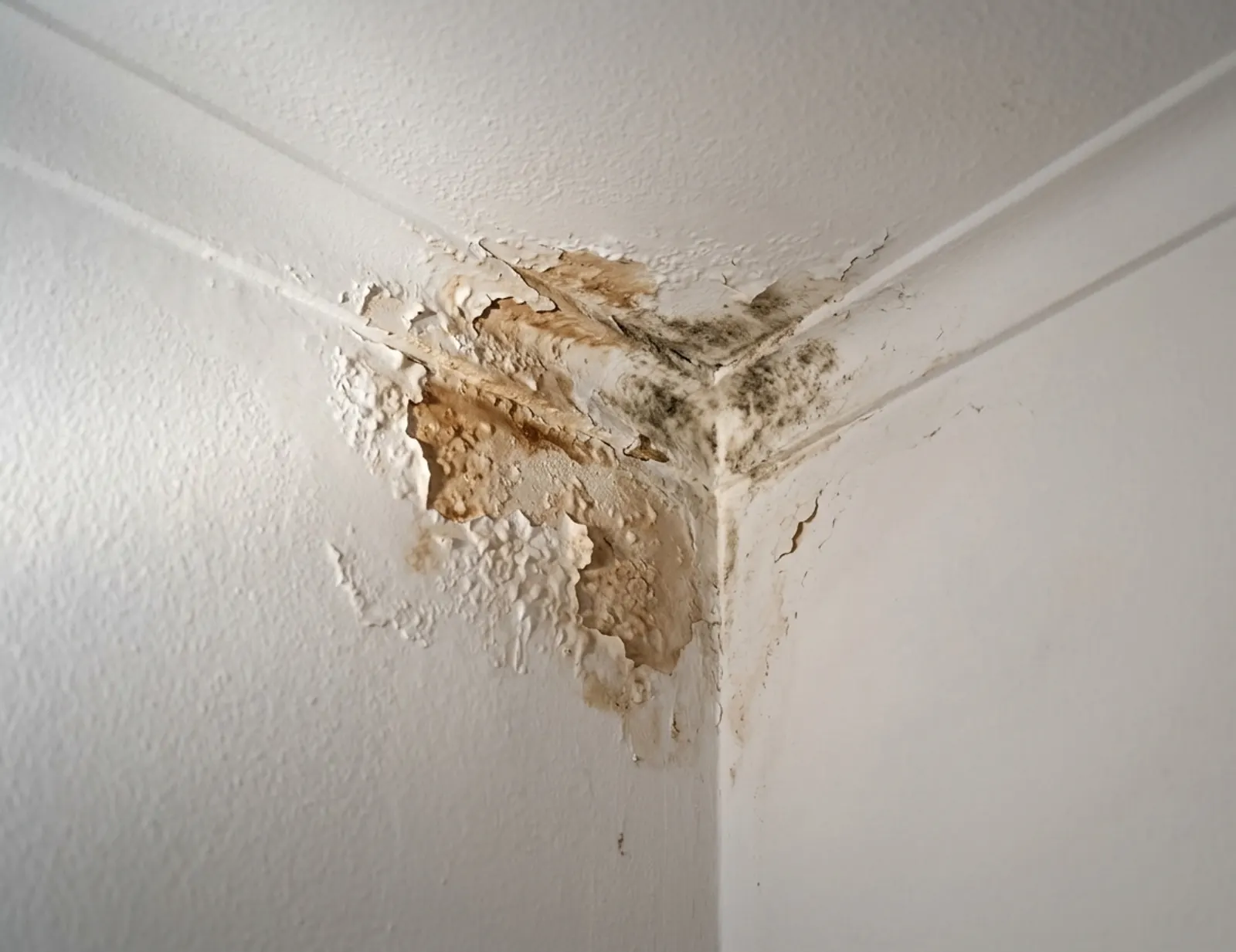
Mould spread across cold surfaces — corners of outside walls, around windows, behind furniture pushed against outside walls, in bedrooms and bathrooms.
Windows streaming with water in the morning. Worse in winter, better in summer. Worse in rooms where people sleep or where clothes are dried.
A plumbing leak: the typical pattern
Damp concentrated in one area, often with a defined edge, near a bathroom, kitchen, water heater or a pipe route. Stays damp in dry weather and in summer. Grows over time. Comes back quickly after cleaning and repainting.
Often accompanied by other signs — see signs of a hidden water leak. The water meter test confirms leaks in the supply pipes; waste pipe leaks only happen when water is used, so notice whether the damp gets worse after showers or using a particular fitting.
Rain getting in: the typical pattern
Damp on outside walls, around window frames or on top-floor ceilings, worse after heavy or wind-driven rain, better after dry spells. Cracked render, faulty gutters or a damaged terrace above are the usual causes. That is a building repair, often for the condominium.
Rising damp — damp at the base of ground-floor walls, with salty white deposits — is another building issue, not a plumbing one.
Simple tests you can do
The foil test: tape a square of kitchen foil tightly to the damp wall for a couple of days. Moisture on the room side means condensation; moisture on the wall side means water coming through the wall.
The meter test for supply leaks: all taps off, watch the meter.
Watch the timing: damp after showers points to the shower; after rain, to the outside; all winter, everywhere, to condensation.
Reducing condensation
Ventilate every day, even in winter: open windows wide for 10 minutes rather than a crack all day. Use the extractor fan when showering and cooking, with the door closed.
Avoid drying clothes indoors without ventilation, or use a dehumidifier. Leave a gap between furniture and outside walls. Keep a steady, moderate temperature rather than big swings.
Clean mould with a suitable mould remover and let it dry; painting over mould without dealing with the moisture brings it back.
When to call a plumber
When the damp is in one spot near water pipes or wet areas, the meter moves with taps closed, the neighbour below reports stains, or the damp gets worse after using a specific fitting. That is when leak detection is worth it — finding the exact spot avoids breaking walls at random.
Using a cheap hygrometer
A small digital hygrometer shows indoor humidity. Levels consistently above about 60–65% in winter make condensation and mould very likely. Watching the number after showers, cooking and drying clothes shows you which habits matter most in your flat.
Tenants and landlords: who deals with damp
Condensation is often a mix of the building (cold walls, poor windows) and how the flat is used (ventilation, drying clothes). Leaks and rain getting in are building or installation problems, usually for the owner or the condominium.
Documenting the pattern — photos, dates, humidity readings, the foil and meter tests — makes the conversation with a landlord factual rather than a matter of opinion.
After a leak is fixed: drying out
Walls and screeds soaked by a leak take weeks to dry. Ventilate, use a dehumidifier, and keep furniture away from the damp area. Repaint only once the wall is dry — with a breathable paint in older buildings — or the stain and mould return.
Damp in one spot that keeps coming back? We check whether it is a plumbing leak — from 120 €.
Leak detection in LisbonFrequently asked questions
Why is my Lisbon flat so damp in winter?
Cold, uninsulated walls, limited heating and indoor moisture cause condensation. Daily ventilation and a dehumidifier help a lot.
Can a leak cause mould?
Yes, usually concentrated in one area near the leak, and it returns quickly after cleaning.
Is black mould dangerous?
Mould can affect health, especially for people with asthma or allergies. Clean it, ventilate, and deal with the moisture source.
My landlord says it is condensation. How do I check?
Use the foil and meter tests, note the pattern and timing, and ask for a professional check if the damp is in one spot near pipes.
Does a dehumidifier help?
Yes, for condensation. It will not fix a leak — the damp will persist in the same spot.

Services Lisbon plumbing team
Guides written by the plumbers who do this work in Lisbon homes every week — drains, leaks, water heaters and pipework.