Blog · 26 September 2026 · 3 min read
Are "Flushable" Wipes Really Flushable? Why They Block Drains
Short answer: no, not in the way toilet paper is. Toilet paper falls apart in water within seconds; wet wipes — including many sold as "flushable" — are made to stay strong when wet, so they travel down the pipe in one piece and catch on joints, bends and anything rough. In older Lisbon buildings with narrow pipes, they are the single most common cause of blocked toilets we see.
Why wipes do not behave like toilet paper
Toilet paper is designed to lose strength the moment it gets wet. Wipes are designed to keep their strength when wet — otherwise they would be useless. Even the ones that eventually break up take far longer than the trip from your toilet to the next bend.
Once one wipe snags, the next catches on it, then paper, then grease. The result is a mat that no amount of flushing will move.
The "flushable" label
"Flushable" usually means it will go down the toilet, not that it will break down in the pipe. Testing standards vary between manufacturers and countries.
Our advice is simple: if it is not toilet paper, it goes in the bin.
What else should never be flushed
Cotton buds and cotton pads, sanitary pads and tampons, nappies, dental floss (it wraps around everything), kitchen paper, tissues (they are stronger than toilet paper), contact lenses, medicines, hair, cat litter and cooking fat.
Keep a small bin with a lid in the bathroom. It is the cheapest plumbing insurance there is.
Why old buildings suffer most
Many older Lisbon buildings have narrow waste pipes, some with rough cast-iron surfaces or tight bends, and a shared column serving every flat. A wipe that might pass through a modern wide pipe gets caught.
And because the column is shared, one household's wipes can end up blocking the ground floor — see who pays for a blocked building drain.
Signs wipes are building up
The toilet takes longer to empty, the water level in the bowl rises higher than usual after flushing, or you hear gurgling from other drains. These are warnings before the full blockage. See blocked toilet with no plunger.
Clearing a wipes blockage
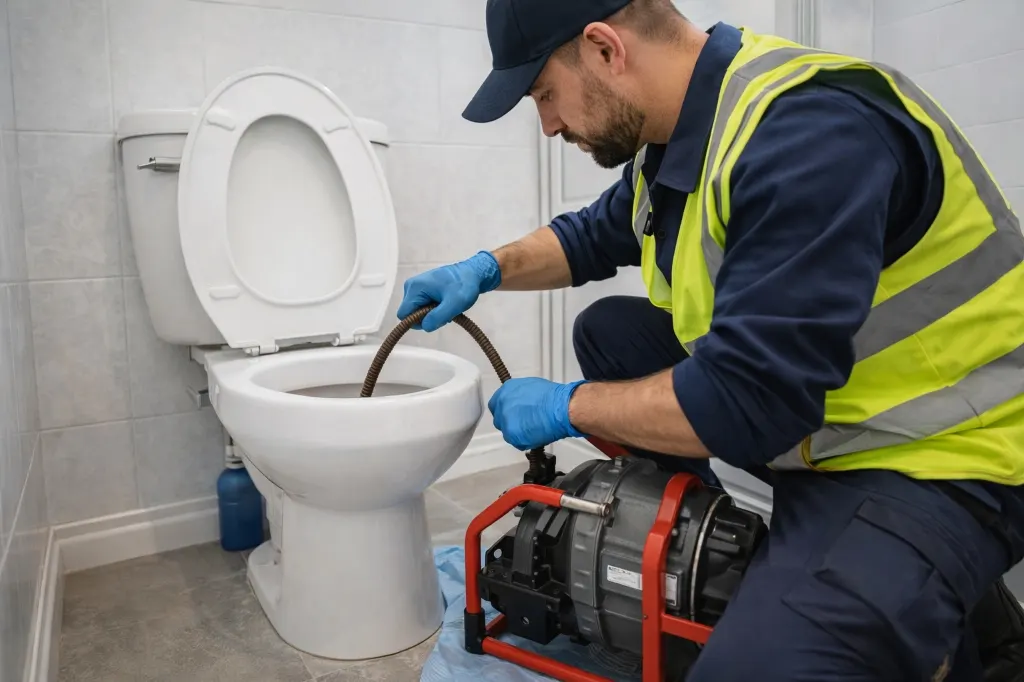
Plungers rarely clear wipes — they compress them. A drain snake that grabs and pulls them out works; for a mat further down the pipe, jetting breaks it up and flushes it away.
Chemical cleaners do nothing to wipes. See chemical drain cleaners.
What happens beyond your building
Wipes that do get through your pipes reach the public sewer, where they combine with fat into large masses that block sewers and damage pumps at treatment plants. Water utilities spend considerable amounts removing them — a cost that ends up on everyone's bill.
Talking to your building about it
If the building column blocks repeatedly with wipes, a short, friendly notice at the entrance often helps more than an argument. The administrator can also schedule preventive cleaning. See who pays for a blocked building drain.
Alternatives to flushing wipes
Use toilet paper for the toilet and keep wipes for the bin. Small lidded bins by the toilet make it easy. For babies and children, nappy bags and a separate bin are simpler for everyone.
If wipes have already blocked the pipe, clearing starts from 75 €.
Wipes already in the pipe? We clear the blockage — from 75 €.
Blocked toilets in LisbonFrequently asked questions
Can I flush one wipe occasionally?
Each one adds to the risk, especially in old pipes. It is better not to.
Do biodegradable wipes break down in pipes?
Biodegradable refers to breaking down over time in the environment, not in the few seconds that matter in your pipes.
Can wipes block the whole building?
Yes. In a shared column, wipes from several flats accumulate and can block the drain for everyone below.
Will a plunger clear wipes?
Rarely. It tends to compact them. A snake or jetting is more effective.
How much does it cost to clear?
Unblocking starts from 75 €.

Services Lisbon plumbing team
Guides written by the plumbers who do this work in Lisbon homes every week — drains, leaks, water heaters and pipework.